
Gear Hobbing to Class 6 Accuracy: How Dual Hydrostatic Spindle Hobbing Machines Hold Precision

Key Takeaways:

How a dual hydrostatic spindle gear hobbing machine reaches stable class 6 gear accuracy, and where hobbing beats grinding for high-volume precision gears.

Tags:
gear hobbing machine class 6 gear accuracy hydrostatic spindle hobbing CNC gear hobbing gear machining equipment

Gear Hobbing to Class 6 Accuracy: How Dual Hydrostatic Spindle Hobbing Machines Hold Precision

Class 6 gear accuracy sits in the sweet spot for most industrial drives: tight enough for smooth, quiet operation under load, yet achievable in volume without the cost of finish grinding. The practical question for a buyer is not whether class 6 is possible — it is whether a hobbing machine can hold it shift after shift. A dual hydrostatic spindle hobbing machine is built to do exactly that.

What class 6 gear accuracy actually means

Under ISO 1328-1, gear accuracy is graded from 0 (finest) to 12 (coarsest). Class 6 demands single-flank composite deviation and tooth-to-tooth pitch variation held within a few micrometres on a medium module gear. AGMA 2000-A88 places an equivalent requirement near AGMA 6–7. For a hobbed gear this means the cutting spindle must stay stable while the hob wears and the blank heats.

Why the dual hydrostatic spindle matters

A hydrostatic spindle floats the rotor on a pressurized oil film with no metal-to-metal contact. That removes the runout and thermal drift you get from rolling bearings at speed. Two independent hydrostatic spindles — one for the hob, one for the worktable — let the machine keep concentricity between cutter and blank through long runs. The result is consistent tooth geometry, not just a good first part.

  • Oil film damps vibration, so tooth surface finish stays clean even at higher feed.
  • No contact wear means spindle geometry does not drift over the production batch.
  • Constant oil temperature holds the thermal envelope, protecting pitch accuracy.

Typical parameters for class 6 hobbing

ParameterTypical valueEffect on accuracy
Radial runout of hob spindle≤ 0.5 µmDirectly sets tooth pitch variation
Oil film pressure2–4 MPaStiffness and damping of the cut
Oil temperature control±0.5–1 °CPrevents thermal pitch drift
Achievable accuracyStable class 6 (ISO)Within AGMA 6–7 band
Module range~1–10 mm (machine dependent)Covers most drive gears

Hobbing vs grinding for class 6 work

For gears in the class 6 band, hobbing is usually the faster, cheaper route when volumes are real. Grinding earns its place above class 5 or on hardened surfaces. We covered the cycle-time and cost trade-off in hobbing vs grinding for gear finishing.

Where these machines earn their keep

  • Automotive and commercial-vehicle transmissions
  • Industrial reducers and gearboxes
  • Machine-tool feed and indexing drives
  • Wind-turbine and agricultural drivetrains

Choosing and specifying

If you are scoping a hobbing cell, start from our CNC gear hobbing machine selection guide, then match spindle type and accuracy class to your module and volume. Browse the gear machining equipment range for hydrostatic hobbing options.

Work with us

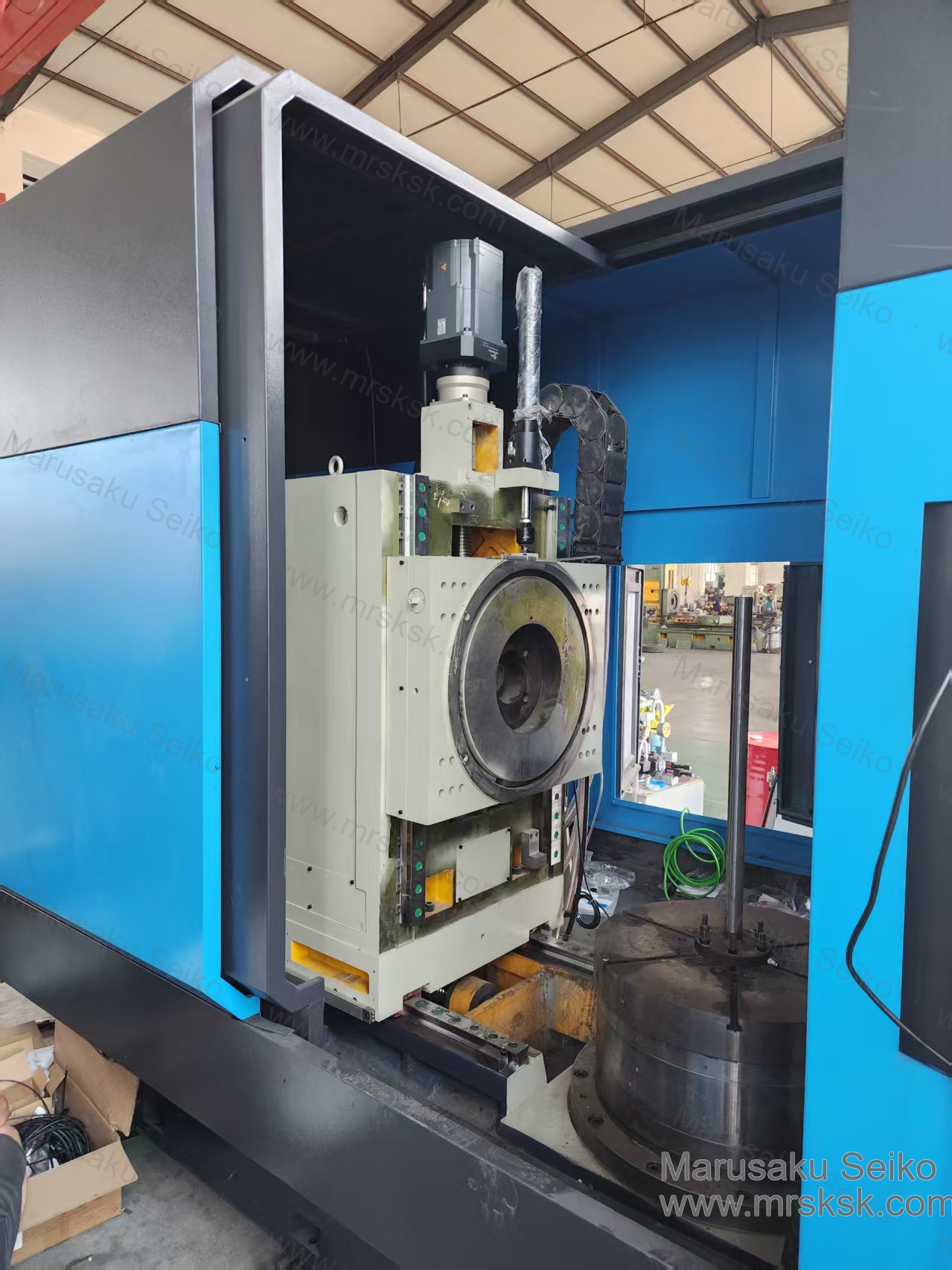
Marusaku Seiko builds gear hobbing machines around dual hydrostatic spindles for stable class 6 output. Send your module, accuracy class, and annual volume and we will propose a configuration and lead time.
Available Languages
🇬🇧 English

Gear Hobbing to Class 6 Accuracy: How Dual Hydrostatic Spindle Hobbing Machines Hold Precision

Gear Hobbing to Class 6 Accuracy: How Dual Hydrostatic Spindle Hobbing Machines Hold Precision

Class 6 gear accuracy sits in the sweet spot for most industrial drives: tight enough for smooth, quiet operation under load, yet achievable in volume without the cost of finish grinding. The practical question for a buyer is not whether class 6 is possible — it is whether a hobbing machine can hold it shift after shift. A dual hydrostatic spindle hobbing machine is built to do exactly that.

What class 6 gear accuracy actually means

Under ISO 1328-1, gear accuracy is graded from 0 (finest) to 12 (coarsest). Class 6 demands single-flank composite deviation and tooth-to-tooth pitch variation held within a few micrometres on a medium module gear. AGMA 2000-A88 places an equivalent requirement near AGMA 6–7. For a hobbed gear this means the cutting spindle must stay stable while the hob wears and the blank heats.

Why the dual hydrostatic spindle matters

A hydrostatic spindle floats the rotor on a pressurized oil film with no metal-to-metal contact. That removes the runout and thermal drift you get from rolling bearings at speed. Two independent hydrostatic spindles — one for the hob, one for the worktable — let the machine keep concentricity between cutter and blank through long runs. The result is consistent tooth geometry, not just a good first part.

  • Oil film damps vibration, so tooth surface finish stays clean even at higher feed.
  • No contact wear means spindle geometry does not drift over the production batch.
  • Constant oil temperature holds the thermal envelope, protecting pitch accuracy.

Typical parameters for class 6 hobbing

ParameterTypical valueEffect on accuracy
Radial runout of hob spindle≤ 0.5 µmDirectly sets tooth pitch variation
Oil film pressure2–4 MPaStiffness and damping of the cut
Oil temperature control±0.5–1 °CPrevents thermal pitch drift
Achievable accuracyStable class 6 (ISO)Within AGMA 6–7 band
Module range~1–10 mm (machine dependent)Covers most drive gears

Hobbing vs grinding for class 6 work

For gears in the class 6 band, hobbing is usually the faster, cheaper route when volumes are real. Grinding earns its place above class 5 or on hardened surfaces. We covered the cycle-time and cost trade-off in hobbing vs grinding for gear finishing.

Where these machines earn their keep

  • Automotive and commercial-vehicle transmissions
  • Industrial reducers and gearboxes
  • Machine-tool feed and indexing drives
  • Wind-turbine and agricultural drivetrains

Choosing and specifying

If you are scoping a hobbing cell, start from our CNC gear hobbing machine selection guide, then match spindle type and accuracy class to your module and volume. Browse the gear machining equipment range for hydrostatic hobbing options.

Work with us

Marusaku Seiko builds gear hobbing machines around dual hydrostatic spindles for stable class 6 output. Send your module, accuracy class, and annual volume and we will propose a configuration and lead time.

🇷🇺 Русский

Нарезание зубчатых колёс точности 6 степени: как станки с двумя гидростатическими шпинделями держат точность

Нарезание зубчатых колёс точности 6 степени: как станки с двумя гидростатическими шпинделями держат точность

Точность 6 степени — рабочая зона для большинства промышленных передач: достаточно плотно для плавной и тихой работы под нагрузкой, но достижимо серийно без затрат на финишное шлифование. Вопрос для закупщика не в том, возможна ли 6 степень, а в том, удержит ли станок её смену за сменой. Зубофрезерный станок с двумя гидростатическими шпинделями создан именно для этого.

Что значит точность 6 степени

По ISO 1328-1 точность зубчатых колёс делится от 0 (высшая) до 12 (низшая). Для 6 степени отклонение профиля и шага между зубьями должно удерживаться в пределах нескольких микрометров на колесе среднего модуля. Эквивалент по AGMA 2000-A88 — примерно 6–7 степень. Для фрезерованного колеса это значит, что шпиндель не должен уходить по мере износа фрезы и нагрева заготовки.

Почему важны два гидростатических шпинделя

Гидростатический шпиндель опирает ротор на масляную плёнку под давлением без металлического контакта. Это убирает биение и тепловой уход, характерные для подшипников качения на скорости. Два независимых гидростатических шпинделя — один для фрезы, второй для стола — удерживают соосность между инструментом и заготовкой в длинных сериях. Итог — стабильная геометрия зуба, а не только удачная первая деталь.

  • Масляная плёнка гасит вибрацию, поверхность зуба остаётся чистой даже при больших подачах.
  • Отсутствие контактного износа — геометрия шпинделя не уходит в партии.
  • Постоянная температура масла держит тепловой коридор и бережёт шаг.

Типовые параметры фрезерования 6 степени

ПараметрТиповое значениеВлияние на точность
Радиальное биение шпинделя фрезы≤ 0,5 мкмЗадаёт вариацию шага зубьев
Давление масляной плёнки2–4 МПаЖёсткость и демпфирование резания
Контроль температуры масла±0,5–1 °CИсключает тепловой уход шага
Достижимая точностьСтабильно 6 степень (ISO)В диапазоне AGMA 6–7
Диапазон модулей≈1–10 мм (по станку)Охват большинства передач

Фрезерование или шлифование для 6 степени

Для колёс 6 степени фрезерование обычно быстрее и дешевле при реальных объёмах. Шлифование оправдано выше 5 степени или на закалённых поверхностях. Сравнение по времени цикла и стоимости — в материале фрезерование против шлифования.

Где такие станки окупаются

  • Автомобильные и коммерческие трансмиссии
  • Промышленные редукторы
  • Приводы подач станков
  • Ветроэнергетика и сельхозтехника

Подбор и спецификация

При проектировании ячейки фрезерования начните с руководства по выбору станка, затем подберите тип шпинделя и класс точности под модуль и объём. Ознакомьтесь с линейкой оборудования для нарезания зубчатых колёс.

Работа с нами

Marusaku Seiko строит зубофрезерные станки на базе двух гидростатических шпинделей для стабильной 6 степени. Пришлите модуль, класс точности и годовой объём — предложим конфигурацию и срок.

🇻🇳 Tiếng Việt

Phay răng đạt cấp chính xác 6: Cách máy phay răng trục chính thủy tĩnh kép giữ được độ chính xác

Phay răng đạt cấp chính xác 6: Cách máy phay răng trục chính thủy tĩnh kép giữ được độ chính xác

Cấp chính xác 6 là vùng làm việc của hầu hết truyền động công nghiệp: đủ chặt để vận hành êm và ít ồn dưới tải, nhưng vẫn đạt được hàng loạt mà không tốn chi phí mài tinh. Câu hỏi của người mua không phải là cấp 6 có thể làm được không, mà là máy có giữ được nó ca sau ca không. Máy phay răng dùng hai trục chính thủy tĩnh được chế tạo đúng để làm điều đó.

Cấp chính xác 6 thực sự nghĩa là gì

Theo ISO 1328-1, cấp chính xác răng chia từ 0 (cao nhất) đến 12 (thấp nhất). Cấp 6 yêu cầu sai lệch bao hình và sai số bước răng giữa các răng nằm trong vài micromet trên bánh răng module trung bình. Tương đương theo AGMA 2000-A88 là khoảng cấp 6–7. Với răng phay, điều này có nghĩa là trục chính phải ổn định khi dao mòn và phôi nóng lên.

Tại sao hai trục chính thủy tĩnh lại quan trọng

Trục chính thủy tĩnh nâng rôto trên màng dầu có áp suất, không tiếp xúc kim loại. Điều này loại bỏ độ rung và trôi nhiệt thường thấy ở ổ bi tốc độ cao. Hai trục chính thủy tĩnh độc lập — một cho dao phay, một cho bàn quay — giữ được đồng tâm giữa dao và phôi qua các mẻ dài. Kết quả là hình học răng ổn định, không chỉ một chi tiết đầu tiên đẹp.

  • Màng dầu triệt tiêu rung động, bề mặt răng sạch ngay cả ở hành trình ăn dao lớn.
  • Không mòn tiếp xúc nên hình học trục chính không trôi trong lô hàng.
  • Nhiệt độ dầu không đổi giữ vùng nhiệt, bảo vệ bước răng.

Thông số điển hình phay cấp 6

Thông sốGiá trị điển hìnhTác động đến độ chính xác
Độ đảo radial trục chính dao≤ 0,5 µmQuyết định sai số bước răng
Áp suất màng dầu2–4 MPaĐộ cứng và giảm chấn khi cắt
Kiểm soát nhiệt độ dầu±0,5–1 °CNgăn trôi bước răng do nhiệt
Độ chính xác đạt đượcỔn định cấp 6 (ISO)Trong dải AGMA 6–7
Dải module~1–10 mm (tùy máy)Phủ hầu hết truyền động

Phay hay mài cho chi tiết cấp 6

Với bánh răng cấp 6, phay thường nhanh và rẻ hơn khi sản lượng thực tế. Mài chỉ thực sự cần trên cấp 5 hoặc bề mặt đã tôi. So sánh chu kỳ và chi phí trong bài phay răng so với mài răng.

Nơi máy này phát huy giá trị

  • Hộp số ô tô và xe thương mại
  • Hộp giảm tốc công nghiệp
  • Cơ cấu dẫn động bước của máy công cụ
  • Tuabin gió và máy nông nghiệp

Chọn và lập thông số

Khi thiết kế trạm phay, hãy bắt đầu từ hướng dẫn chọn máy phay răng CNC, sau đó ghép loại trục chính và cấp chính xác với module và sản lượng. Xem dải thiết bị gia công răng với tùy chọn trục chính thủy tĩnh.

Hợp tác với chúng tôi

Marusaku Seiko chế tạo máy phay răng quanh hai trục chính thủy tĩnh để ra cấp 6 ổn định. Gửi module, cấp chính xác và sản lượng năm, chúng tôi sẽ đề xuất cấu hình và tiến độ.

🇪🇸 Español

Tallado de engranajes con precisión de clase 6: cómo las talladoras de husillo hidrostático doble mantienen la precisión

Tallado de engranajes con precisión de clase 6: cómo las talladoras de husillo hidrostático doble mantienen la precisión

La clase 6 de precisión es la zona de trabajo de la mayoría de los trenes de engranajes industriales: lo bastante ajustada para un funcionamiento suave y silencioso bajo carga, pero alcanzable en serie sin el coste del rectificado de acabado. La pregunta del comprador no es si la clase 6 es posible, sino si la máquina la mantiene turno tras turno. Una talladora de engranajes con doble husillo hidrostático está construida precisamente para eso.

Qué significa realmente la precisión de clase 6

Según la ISO 1328-1, la precisión de los engranajes se gradúa del 0 (más fina) al 12 (más gruesa). La clase 6 exige que la desviación compuesta de flanco y la variación de paso entre dientes se mantengan en pocos micrómetros en un engranaje de módulo medio. El equivalente en AGMA 2000-A88 cae cerca de la clase 6–7. Para un engranaje tallado, eso implica que el husillo debe permanecer estable mientras la fresa se desgasta y la pieza se calienta.

Por qué importan los dos husillos hidrostáticos

Un husillo hidrostático apoya el rotor sobre una película de aceite a presión, sin contacto metálico. Eso elimina el salto y la deriva térmica propios de los rodamientos de bolas a alta velocidad. Dos husillos hidrostáticos independientes —uno para la fresa, otro para la mesa— mantienen la concentricidad entre la herramienta y la pieza en series largas. El resultado es una geometría de diente coherente, no solo una primera pieza buena.

  • La película de aceite amortigua la vibración, la superficie del diente queda limpia incluso a avances altos.
  • Sin desgaste por contacto, la geometría del husillo no se desvía en el lote.
  • La temperatura de aceite constante mantiene el margen térmico y protege el paso.

Parámetros típicos del tallado de clase 6

ParámetroValor típicoEfecto en la precisión
Salto radial del husillo de fresa≤ 0,5 µmDefine la variación de paso
Presión de la película de aceite2–4 MPaRigidez y amortiguación del corte
Control de temperatura del aceite±0,5–1 °CEvita la deriva térmica del paso
Precisión alcanzableClase 6 estable (ISO)Dentro del rango AGMA 6–7
Rango de módulo~1–10 mm (según máquina)Cubre la mayoría de trenes

Tallado frente a rectificado para trabajo de clase 6

Para engranajes en la banda de clase 6, el tallado suele ser la vía más rápida y económica cuando los volúmenes son reales. La rectificación merece la pena por encima de la clase 5 o en superficies templadas. El contraste de tiempo de ciclo y coste está en tallado frente a rectificado de engranajes.

Dónde estas máquinas amortizan la inversión

  • Cajas de cambio de automóvil y vehículo comercial
  • Reductores industriales
  • Accionamientos de avance de máquina-herramienta
  • Turbinas eólicas y maquinaria agrícola

Selección y especificación

Si está definiendo una celda de tallado, empiece por nuestra guía de selección de talladoras CNC y luego iguale el tipo de husillo y la clase de precisión con su módulo y volumen. Explore la gama de equipos de mecanizado de engranajes con opciones hidrostáticas.

Trabaje con nosotros

Marusaku Seiko construye talladoras de engranajes en torno a doble husillo hidrostático para una salida estable de clase 6. Envíenos su módulo, clase de precisión y volumen anual y le propondremos una configuración y un plazo.