
Hard Hobbing vs Grinding: Reclaiming Cycle Time Without Losing the Grade

Key Takeaways:

Hard hobbing versus grinding: reclaiming cycle time without losing ISO 1328 grade, and why the supporting machine decides the outcome.

Tags:
hard hobbing hardened gears solid gear hobbing gear hobbing vs grinding CBN hob gear manufacturing efficiency

Gear grinding earned its reputation on hardened parts because it held the grade after heat treatment. But grinding is slow, tooling is expensive, and for an enormous band of gears it is simply more process than the tolerance requires. Solid (hard) hobbing — cutting the gear in its hardened state, often with a CBN or coated hob — has spent a decade closing that gap, and the decision now turns on three things: attainable grade, surface integrity, and the machine that makes either route trustworthy.

What hard hobbing can actually hold

On a capable machine, hard hobbing reaches ISO 1328 grade 6–7 on many sizes, with surface finish and a subsurface free of the white-layer burning that careless grinding leaves behind. For automotive, power-tool, and general industrial gearing this covers the majority of volume. Grinding keeps the crown for ultra-fine finish, deep internal bores, and the very highest grades where a single-flank deviation budget leaves no room.

Where the cycle-time win comes from

Hobbing removes material continuously along the profile and skips wheel dressing, coolant-laden swarf handling, and the multi-pass creep feed that grinding needs on hard stock. The hobbing-versus-grinding efficiency gap is widest on small-to-medium gears run in batches — exactly the work most shops actually ship.

Why the machine, again, decides

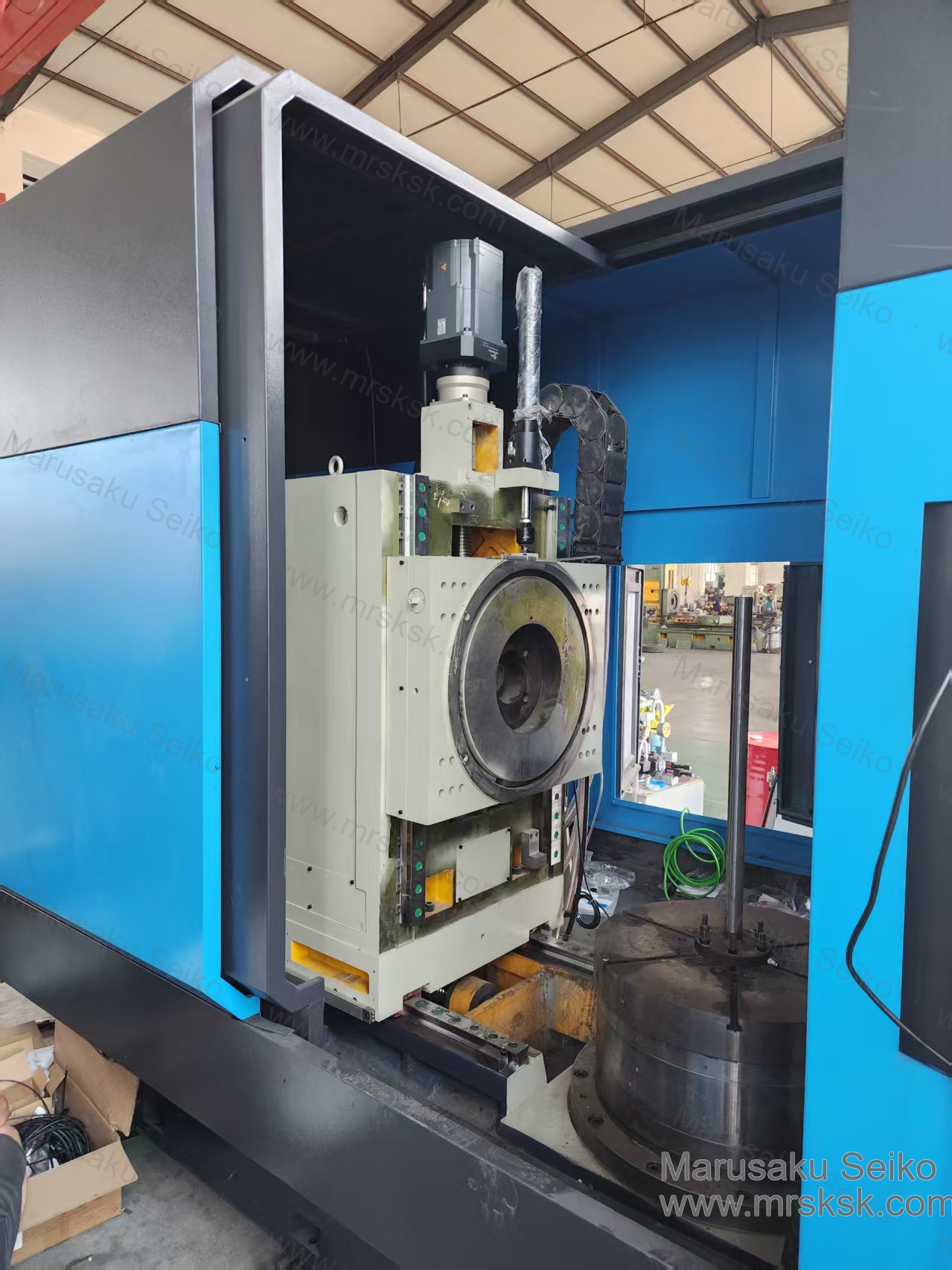
Cutting hardened steel at speed demands stiffness and damping the cutter cannot supply. A compliant machine deflects under the cut and writes its error into every tooth; a machine with an oil-film spindle and a backlash-free direct-drive dividing axis does not. That is the same hydrostatic logic that sets the precision for gear hobbing — the film holds the tool where it was aimed while the hob eats hard stock. The grade is held by the support, not by slowing down to protect a weak machine.

The mature position

Not "hobbing replaces grinding," but each gear on the process its grade and volume deserve — hard hobbing for the long middle of the tolerance-and-volume curve, grinding for the extremes. Choosing first, machine second, is the discipline behind a dual hydrostatic hobbing machine built for both precision and throughput. The efficiency is real; the grade is what makes it worth taking.
Available Languages
🇬🇧 English

Hard Hobbing vs Grinding: Reclaiming Cycle Time Without Losing the Grade

Gear grinding earned its reputation on hardened parts because it held the grade after heat treatment. But grinding is slow, tooling is expensive, and for an enormous band of gears it is simply more process than the tolerance requires. Solid (hard) hobbing — cutting the gear in its hardened state, often with a CBN or coated hob — has spent a decade closing that gap, and the decision now turns on three things: attainable grade, surface integrity, and the machine that makes either route trustworthy.

What hard hobbing can actually hold

On a capable machine, hard hobbing reaches ISO 1328 grade 6–7 on many sizes, with surface finish and a subsurface free of the white-layer burning that careless grinding leaves behind. For automotive, power-tool, and general industrial gearing this covers the majority of volume. Grinding keeps the crown for ultra-fine finish, deep internal bores, and the very highest grades where a single-flank deviation budget leaves no room.

Where the cycle-time win comes from

Hobbing removes material continuously along the profile and skips wheel dressing, coolant-laden swarf handling, and the multi-pass creep feed that grinding needs on hard stock. The hobbing-versus-grinding efficiency gap is widest on small-to-medium gears run in batches — exactly the work most shops actually ship.

Why the machine, again, decides

Cutting hardened steel at speed demands stiffness and damping the cutter cannot supply. A compliant machine deflects under the cut and writes its error into every tooth; a machine with an oil-film spindle and a backlash-free direct-drive dividing axis does not. That is the same hydrostatic logic that sets the precision for gear hobbing — the film holds the tool where it was aimed while the hob eats hard stock. The grade is held by the support, not by slowing down to protect a weak machine.

The mature position

Not "hobbing replaces grinding," but each gear on the process its grade and volume deserve — hard hobbing for the long middle of the tolerance-and-volume curve, grinding for the extremes. Choosing first, machine second, is the discipline behind a dual hydrostatic hobbing machine built for both precision and throughput. The efficiency is real; the grade is what makes it worth taking.